



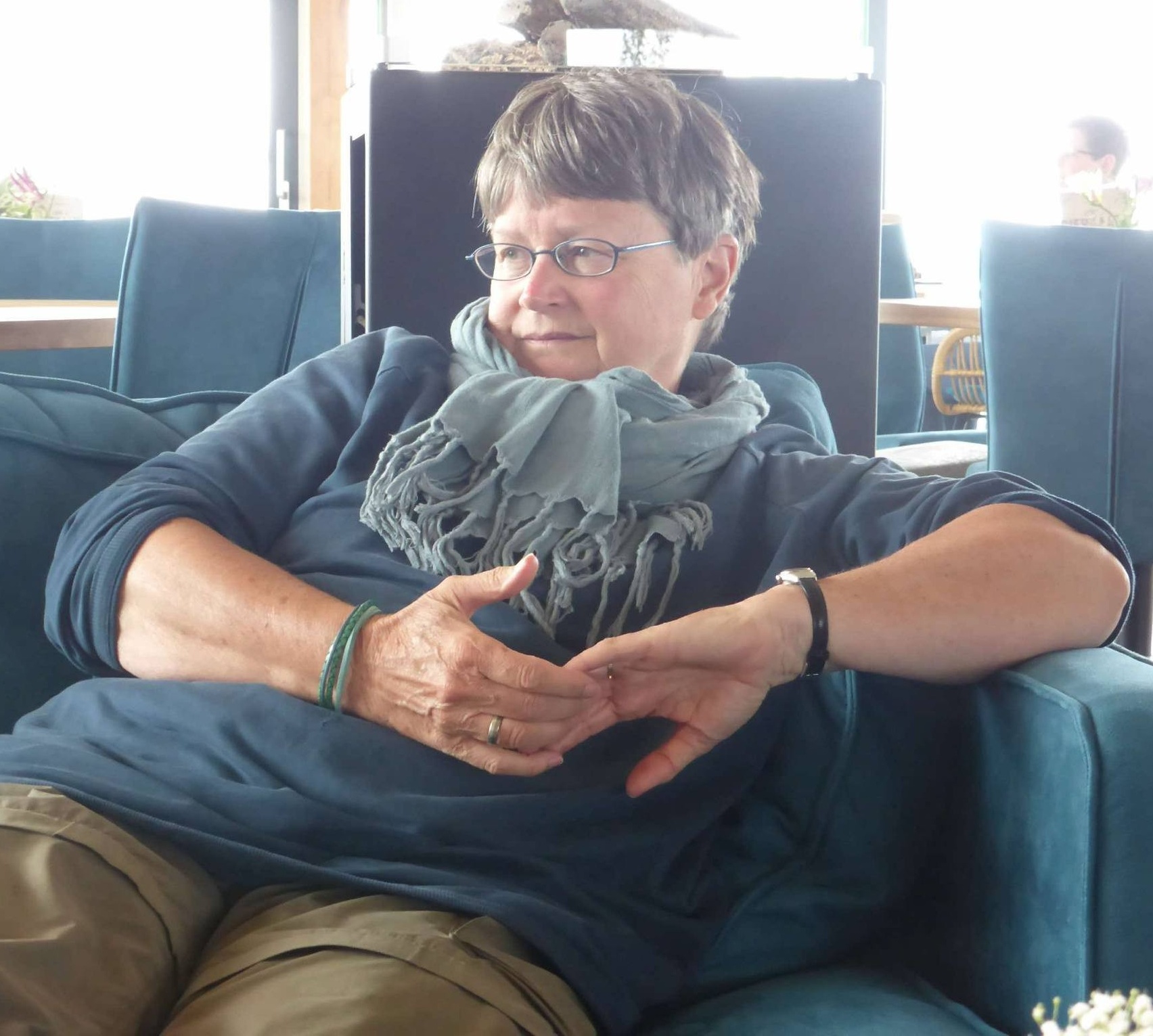
“In 1962, ik was negen jaar oud, kreeg ik een leverontsteking. Ik moest direct zes weken plat en kreeg een streng vetarm dieet. Daarna ben ik nog zes weken naar een koloniehuis gegaan om aan te sterken en te rusten. Mijn huisarts van toen ben ik nog altijd dankbaar dat hij meteen rust voorschreef. Ik denk dat dat ervoor heeft gezorgd dat ik daarna nog lange tijd redelijk heb kunnen functioneren.
Toch zijn de klachten nooit echt verdwenen. Ik hield een vergrote lever, leververvetting, verhoging en vooral een voortdurende vermoeidheid. Sporten lukte niet; alles wat ik probeerde, moest ik weer opgeven.
Rond mijn dertigste kwam ik bij een huisarts die sprak van een postviraal syndroom. Ik had toen naast de vermoeidheid ook veel last van keelpijn en spierpijn. Al snel werd gesuggereerd dat het ‘tussen de oren’ zat. Ik werd doorgestuurd naar een internist, die na bloedonderzoek het Epstein-Barrvirus vond, maar tot dezelfde conclusie kwam: een postviraal syndroom waar ik mee moest leren leven.
In de jaren daarna ging het met vallen en opstaan. Er waren periodes dat ik een jaar lang niet kon werken en alleen nog kon liggen of hangen. Mijn armen en benen voelden als beton en de uitputting was extreem. Bij de bedrijfsarts werd het opnieuw afgedaan als iets psychisch en kreeg ik het advies om te gaan bewegen. Ik werd in een fitnessgroep geplaatst met begeleiding, maar in plaats van vooruitgang ging ik juist achteruit. Uiteindelijk werd gesuggereerd dat ik beter naar een psycholoog kon gaan. Dat heb ik niet gedaan, omdat ik voelde dat dat niet de kern van het probleem was.
Langzaam namen de klachten verder toe en werd ik steeds duizeliger. Met veel moeite kreeg ik een verwijzing naar hoogleraar cardiologie Visser. Na een kanteltafeltest bleek dat ik orthostatische intolerantie had: ik viel direct flauw en had dertig procent minder bloedvolume. Met medicatie ging het iets beter, maar nieuwe klachten dienden zich al snel aan.
De pijn in mijn tenen en scheenbenen werd steeds heftiger: een prikkelend, ijzig gevoel dat moeilijk te verdragen is. Ook mijn ogen begonnen anders te reageren. Een neuroloog concludeerde na onderzoek dat er geen sprake was van dunnevezelneuropathie of ME/CVS. Volgens haar had ik dat zelf bedacht en zat het tussen de oren. Via een andere route kwam ik uiteindelijk in Maastricht UMC terecht, waar wél dunnevezelneuropathie werd vastgesteld. Tot nu toe helpt geen enkele pijnstiller en de klachten nemen alleen maar toe. Na de Moderna-vaccinatie zijn de pijnen verergerd en is ook de zwakte in mijn benen toegenomen. Soms kan ik nauwelijks lopen.
Wat voor mij altijd duidelijk is geweest, is dat mijn klachten verergeren na inspanning. Dat heb ik steeds aangegeven, maar daar werd vaak aan voorbijgegaan. Ik kreeg juist het advies om meer te bewegen, terwijl dat voor mij averechts werkte.
Dat er nu, terwijl ik 72 ben, eindelijk serieus biomedisch onderzoek wordt gedaan naar ME/CVS, vind ik moeilijk. Dat had veel eerder moeten gebeuren. Ook voelt het wrang dat ik zelf niet meer kan deelnemen aan onderzoeken, terwijl mensen die al zo lang ziek zijn juist waardevolle informatie kunnen geven. Ik volg de ontwikkelingen met interesse en hoop dat er eindelijk beter wordt gekeken naar wat er in het lichaam gebeurt, iets waar jarenlang te weinig aandacht voor is geweest.”
**
We begrijpen heel goed dat het teleurstellend is als u net als Ettie graag wilt meedoen, maar dat dit vanwege de leeftijdsgrens van 65 jaar niet kan. Bij het toenemen van de leeftijd ontstaan heel geleidelijk veranderingen in bijvoorbeeld de spieren, in het immuunsysteem en op andere plekken in het lichaam. Deze kunnen de onderzoeksmetingen beïnvloeden, waardoor de resultaten minder precies worden.
NMCB streeft naar betere diagnostiek en behandeling voor alle patiënten, ongeacht de leeftijd. We zijn daarom iedereen die ons volgt en steunt, zoals Ettie, enorm dankbaar!
NMCB
We firmly believe that the internet should be available and accessible to anyone, and are committed to providing a website that is accessible to the widest possible audience, regardless of circumstance and ability.
To fulfill this, we aim to adhere as strictly as possible to the World Wide Web Consortium’s (W3C) Web Content Accessibility Guidelines 2.1 (WCAG 2.1) at the AA level. These guidelines explain how to make web content accessible to people with a wide array of disabilities. Complying with those guidelines helps us ensure that the website is accessible to all people: blind people, people with motor impairments, visual impairment, cognitive disabilities, and more.
This website utilizes various technologies that are meant to make it as accessible as possible at all times. We utilize an accessibility interface that allows persons with specific disabilities to adjust the website’s UI (user interface) and design it to their personal needs.
Additionally, the website utilizes an AI-based application that runs in the background and optimizes its accessibility level constantly. This application remediates the website’s HTML, adapts Its functionality and behavior for screen-readers used by the blind users, and for keyboard functions used by individuals with motor impairments.
If you’ve found a malfunction or have ideas for improvement, we’ll be happy to hear from you. You can reach out to the website’s operators by using the following email
Our website implements the ARIA attributes (Accessible Rich Internet Applications) technique, alongside various different behavioral changes, to ensure blind users visiting with screen-readers are able to read, comprehend, and enjoy the website’s functions. As soon as a user with a screen-reader enters your site, they immediately receive a prompt to enter the Screen-Reader Profile so they can browse and operate your site effectively. Here’s how our website covers some of the most important screen-reader requirements, alongside console screenshots of code examples:
Screen-reader optimization: we run a background process that learns the website’s components from top to bottom, to ensure ongoing compliance even when updating the website. In this process, we provide screen-readers with meaningful data using the ARIA set of attributes. For example, we provide accurate form labels; descriptions for actionable icons (social media icons, search icons, cart icons, etc.); validation guidance for form inputs; element roles such as buttons, menus, modal dialogues (popups), and others. Additionally, the background process scans all the website’s images and provides an accurate and meaningful image-object-recognition-based description as an ALT (alternate text) tag for images that are not described. It will also extract texts that are embedded within the image, using an OCR (optical character recognition) technology. To turn on screen-reader adjustments at any time, users need only to press the Alt+1 keyboard combination. Screen-reader users also get automatic announcements to turn the Screen-reader mode on as soon as they enter the website.
These adjustments are compatible with all popular screen readers, including JAWS and NVDA.
Keyboard navigation optimization: The background process also adjusts the website’s HTML, and adds various behaviors using JavaScript code to make the website operable by the keyboard. This includes the ability to navigate the website using the Tab and Shift+Tab keys, operate dropdowns with the arrow keys, close them with Esc, trigger buttons and links using the Enter key, navigate between radio and checkbox elements using the arrow keys, and fill them in with the Spacebar or Enter key.Additionally, keyboard users will find quick-navigation and content-skip menus, available at any time by clicking Alt+1, or as the first elements of the site while navigating with the keyboard. The background process also handles triggered popups by moving the keyboard focus towards them as soon as they appear, and not allow the focus drift outside it.
Users can also use shortcuts such as “M” (menus), “H” (headings), “F” (forms), “B” (buttons), and “G” (graphics) to jump to specific elements.
We aim to support the widest array of browsers and assistive technologies as possible, so our users can choose the best fitting tools for them, with as few limitations as possible. Therefore, we have worked very hard to be able to support all major systems that comprise over 95% of the user market share including Google Chrome, Mozilla Firefox, Apple Safari, Opera and Microsoft Edge, JAWS and NVDA (screen readers).
Despite our very best efforts to allow anybody to adjust the website to their needs. There may still be pages or sections that are not fully accessible, are in the process of becoming accessible, or are lacking an adequate technological solution to make them accessible. Still, we are continually improving our accessibility, adding, updating and improving its options and features, and developing and adopting new technologies. All this is meant to reach the optimal level of accessibility, following technological advancements. For any assistance, please reach out to