




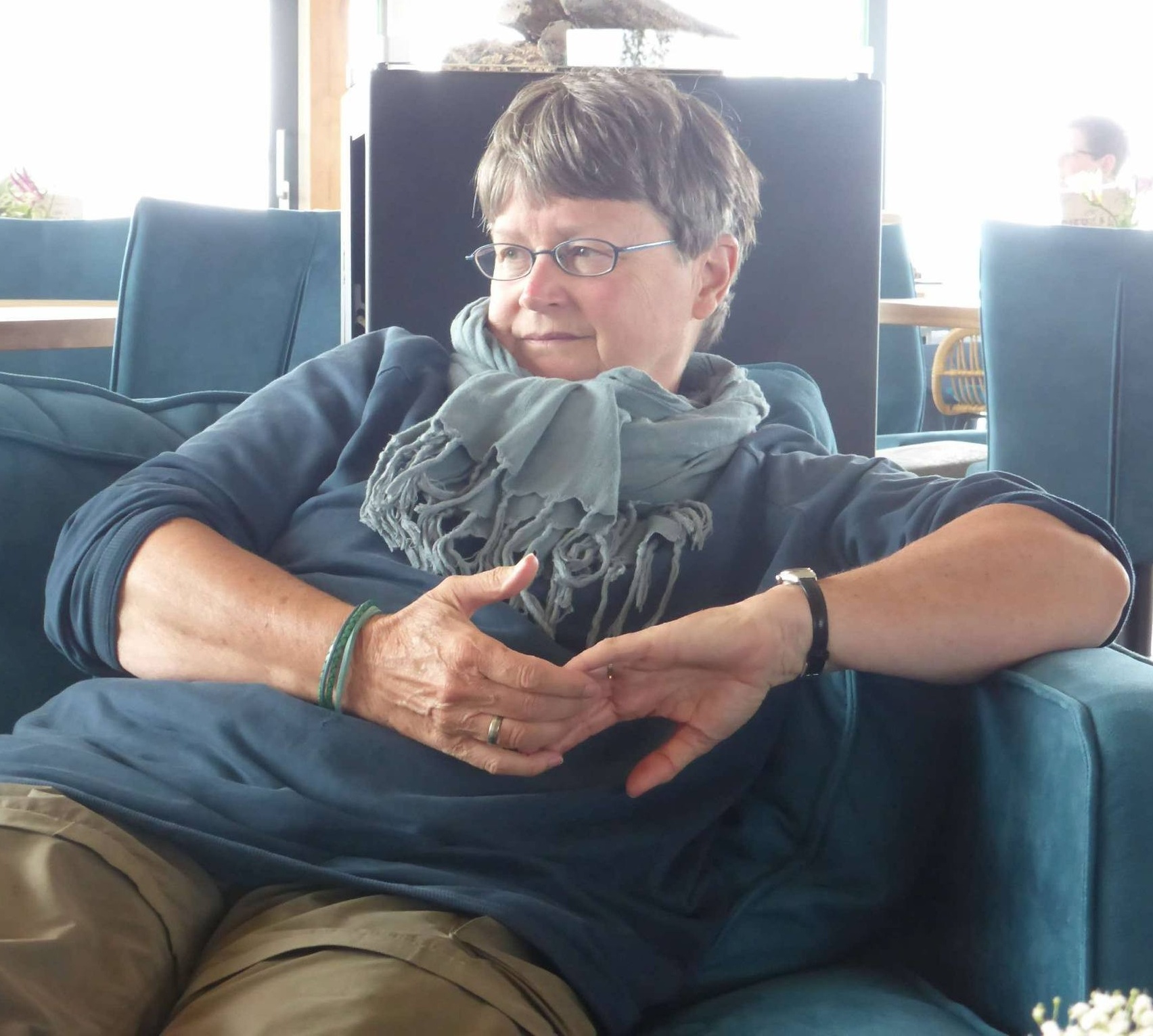
“In 1962, when I was nine years old, I developed hepatitis. I was immediately prescribed six weeks of strict bed rest and a very low-fat diet. After that, I spent another six weeks at a convalescent home to recover and rest. I am still grateful to my GP at the time for prescribing rest straight away. I believe this helped me function reasonably well for many years afterwards.
Nevertheless, my symptoms never really disappeared. I was left with an enlarged liver, fatty liver disease, a raised temperature and, above all, persistent fatigue. I was unable to take part in sports; everything I tried, I eventually had to give up.
When I was around thirty, I saw a GP who described my condition as a post-viral syndrome. In addition to the fatigue, I was experiencing severe sore throats and muscle pain. It was soon suggested that the problem was “all in my head”. I was referred to an internal medicine specialist, who detected the Epstein–Barr virus through blood tests but reached the same conclusion: a post-viral syndrome that I would have to learn to live with.
In the years that followed, my condition fluctuated. There were periods when I was unable to work for an entire year and could do little more than lie down or recline. My arms and legs felt like concrete, and the exhaustion was extreme. The occupational health physician again dismissed my symptoms as psychological and advised me to exercise. I was placed in a supervised fitness group, but instead of improving, my condition deteriorated. Eventually, I was advised to see a psychologist. I did not do so because I felt that this was not the root of the problem.
Gradually, my symptoms worsened and I became increasingly dizzy. With considerable difficulty, I obtained a referral to Professor Visser, a professor of cardiology. A tilt-table test revealed that I had orthostatic intolerance: I fainted immediately and had a 30% lower blood volume. Medication helped somewhat, but new symptoms soon emerged.
The pain in my toes and shins became increasingly severe: a tingling, icy sensation that is difficult to endure. My eyes also began to react differently. Following an examination, a neurologist concluded that I had neither small fibre neuropathy nor ME/CFS. According to her, I had made it all up and the problem was psychological. Through a different route, I eventually ended up at Maastricht University Medical Centre (Maastricht UMC), where small fibre neuropathy was diagnosed. To this day, no painkiller has helped, and my symptoms continue to worsen. After the Moderna vaccination, the pain became more severe and the weakness in my legs increased. Sometimes I can barely walk.
One thing has always been clear to me: my symptoms worsen after exertion. I have repeatedly explained this, but my concerns were often ignored. Instead, I was advised to exercise more, even though this had the opposite effect for me.
Now, at the age of 72, I find it difficult to accept that serious biomedical research into ME/CFS is finally being carried out. This should have happened much earlier. It also feels bitterly unfair that I can no longer participate in research myself, even though people who have been ill for so long can provide particularly valuable information. I follow developments with great interest and hope that researchers will finally pay closer attention to what is happening inside the body — something that has received far too little attention for many years.”
**
We fully understand how disappointing it can be when, like Ettie, you would very much like to participate in research but are unable to do so because of the upper age limit of 65. As we get older, gradual changes occur in our muscles, immune system and other parts of the body. These changes can affect research measurements and make the results less precise.
NMCB is committed to improving diagnosis and treatment for all patients, regardless of age. We are therefore extremely grateful to everyone who follows and supports our work, including Ettie!
NMCB
We firmly believe that the internet should be available and accessible to anyone, and are committed to providing a website that is accessible to the widest possible audience, regardless of circumstance and ability.
To fulfill this, we aim to adhere as strictly as possible to the World Wide Web Consortium’s (W3C) Web Content Accessibility Guidelines 2.1 (WCAG 2.1) at the AA level. These guidelines explain how to make web content accessible to people with a wide array of disabilities. Complying with those guidelines helps us ensure that the website is accessible to all people: blind people, people with motor impairments, visual impairment, cognitive disabilities, and more.
This website utilizes various technologies that are meant to make it as accessible as possible at all times. We utilize an accessibility interface that allows persons with specific disabilities to adjust the website’s UI (user interface) and design it to their personal needs.
Additionally, the website utilizes an AI-based application that runs in the background and optimizes its accessibility level constantly. This application remediates the website’s HTML, adapts Its functionality and behavior for screen-readers used by the blind users, and for keyboard functions used by individuals with motor impairments.
If you’ve found a malfunction or have ideas for improvement, we’ll be happy to hear from you. You can reach out to the website’s operators by using the following email
Our website implements the ARIA attributes (Accessible Rich Internet Applications) technique, alongside various different behavioral changes, to ensure blind users visiting with screen-readers are able to read, comprehend, and enjoy the website’s functions. As soon as a user with a screen-reader enters your site, they immediately receive a prompt to enter the Screen-Reader Profile so they can browse and operate your site effectively. Here’s how our website covers some of the most important screen-reader requirements, alongside console screenshots of code examples:
Screen-reader optimization: we run a background process that learns the website’s components from top to bottom, to ensure ongoing compliance even when updating the website. In this process, we provide screen-readers with meaningful data using the ARIA set of attributes. For example, we provide accurate form labels; descriptions for actionable icons (social media icons, search icons, cart icons, etc.); validation guidance for form inputs; element roles such as buttons, menus, modal dialogues (popups), and others. Additionally, the background process scans all the website’s images and provides an accurate and meaningful image-object-recognition-based description as an ALT (alternate text) tag for images that are not described. It will also extract texts that are embedded within the image, using an OCR (optical character recognition) technology. To turn on screen-reader adjustments at any time, users need only to press the Alt+1 keyboard combination. Screen-reader users also get automatic announcements to turn the Screen-reader mode on as soon as they enter the website.
These adjustments are compatible with all popular screen readers, including JAWS and NVDA.
Keyboard navigation optimization: The background process also adjusts the website’s HTML, and adds various behaviors using JavaScript code to make the website operable by the keyboard. This includes the ability to navigate the website using the Tab and Shift+Tab keys, operate dropdowns with the arrow keys, close them with Esc, trigger buttons and links using the Enter key, navigate between radio and checkbox elements using the arrow keys, and fill them in with the Spacebar or Enter key.Additionally, keyboard users will find quick-navigation and content-skip menus, available at any time by clicking Alt+1, or as the first elements of the site while navigating with the keyboard. The background process also handles triggered popups by moving the keyboard focus towards them as soon as they appear, and not allow the focus drift outside it.
Users can also use shortcuts such as “M” (menus), “H” (headings), “F” (forms), “B” (buttons), and “G” (graphics) to jump to specific elements.
We aim to support the widest array of browsers and assistive technologies as possible, so our users can choose the best fitting tools for them, with as few limitations as possible. Therefore, we have worked very hard to be able to support all major systems that comprise over 95% of the user market share including Google Chrome, Mozilla Firefox, Apple Safari, Opera and Microsoft Edge, JAWS and NVDA (screen readers).
Despite our very best efforts to allow anybody to adjust the website to their needs. There may still be pages or sections that are not fully accessible, are in the process of becoming accessible, or are lacking an adequate technological solution to make them accessible. Still, we are continually improving our accessibility, adding, updating and improving its options and features, and developing and adopting new technologies. All this is meant to reach the optimal level of accessibility, following technological advancements. For any assistance, please reach out to